

Russian Scientists Investigate Age-Related Differences in Brain Damage Volume Following Childhood Stroke

A team of Russian scientists and clinicians, including Sofya Kulikova from HSE University in Perm, compared the extent and characteristics of brain damage in children who experienced a stroke either within the first four weeks of life or before the age of two. The researchers found that the younger the child, the more extensive the brain damage—particularly in the frontal and parietal lobes, which are responsible for movement, language, and thinking. The study, published in Neuroscience and Behavioral Physiology, provides insights into how age can influence the nature and extent of brain lesions and lays the groundwork for developing personalised rehabilitation programmes for children who experience a stroke early in life.
A stroke is an acute disruption of blood flow in the brain: it occurs either when a blood vessel is blocked by a clot or embolus (ischaemic stroke) or when a vessel ruptures, causing bleeding (haemorrhagic stroke). Paediatric stroke has distinct characteristics, as a child’s brain is continuously growing and developing. Although the mechanism of stroke in children and adults is the same—rupture or blockage of a blood vessel—the nature of the pathology differs. In adults, strokes are usually caused by emboli (blood clots that block blood flow) or by atherosclerosis, in which cholesterol builds up on vessel walls and obstructs circulation. Children, however, typically have neither of these conditions.

Sofya Kulikova
'Paediatric strokes most often occur in infants with congenital heart defects, including those who have undergone surgery. This is because their cardiovascular system does not function properly. Moreover, in some cases of perinatal stroke, it is impossible to determine the exact timing—whether it occurred before, during, or shortly after birth,' explains Sofya Kulikova, Director of the Centre for Cognitive Neuroscience at HSE University in Perm and co-author of the article.
Extensive brain lesions are generally associated with a poor prognosis, but it remains unclear whether this holds true for children, whose brains exhibit exceptional plasticity. To explore this question, scientists from several Russian universities and medical institutions—including HSE University, Ural Federal University, Moscow State University, the Sechenov Institute of Evolutionary Physiology and Biochemistry of the Russian Academy of Sciences, Ural State Medical University, the Skolkovo Institute of Science and Technology, as well as Children's City Clinical Hospital No. 9 and the Regional Children's Clinical Hospital in Yekaterinburg—compared the size of stroke-related brain lesions in children of different ages.
The researchers analysed MRI data from 35 children who experienced an ischemic stroke before the age of two and were treated in hospitals in Yekaterinburg, Perm, Chelyabinsk, and Tyumen between 2015 and 2019. The children’s ages at the time of the stroke ranged from four days to 23 months.
To assess the effects of stroke, the researchers used a modern imaging analysis technique known as voxel-based morphometry. Simply put, this method involves manually tracing the boundaries of brain damage on each MRI slice, layer by layer. A specialised computer program then calculates the precise volume of the affected area in cubic millimetres. This technology provides more objective data than traditional MRI reports, which typically focus on qualitative characteristics such as the stroke’s boundaries and location. Voxel-based morphometry, by contrast, yields quantitative data—including the absolute size of the lesion and its proportion relative to total brain volume. As a result, this method produces precise numerical values that can be used for statistical analysis and comparison.
The researchers divided the cases into two age groups: perinatal and paediatric strokes. Perinatal strokes occurred within the first 28 days of life, while paediatric strokes occurred before the age of two.
The study found that strokes in infants and in children older than one month differ both in the size and nature of brain lesions. In infants with perinatal stroke, the volume of brain damage was significantly greater than in older children—7.9% versus 1.6% of total brain volume. Newborns were also more likely to experience cortical disorders, mixed and bilateral strokes, whereas in children aged 28 days to two years, strokes were more often localised in subcortical regions and affected only the left hemisphere.
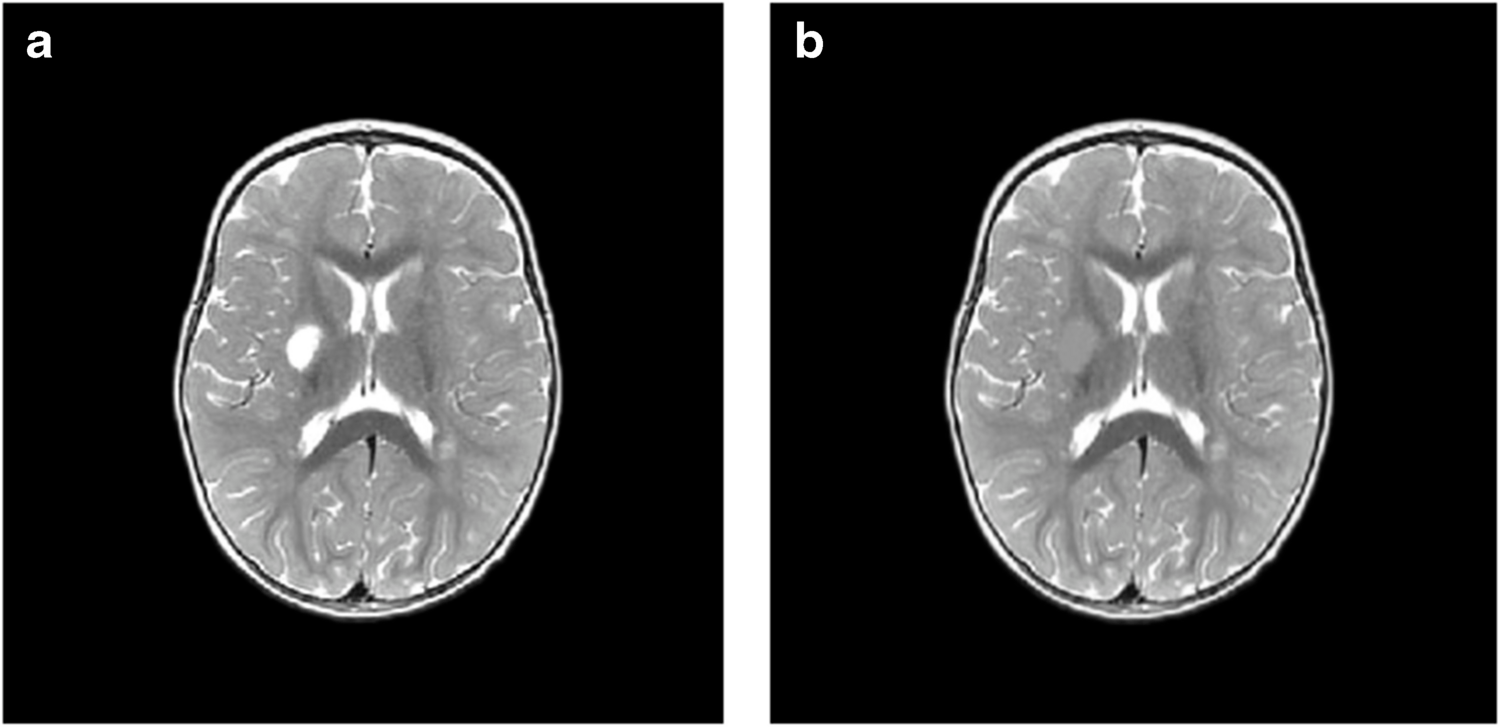
'Children’s brains are highly plastic, and this plasticity is greater the younger the child. On one hand, an earlier stroke leads to more extensive lesions, but it remains unclear how this will impact the child’s subsequent development. A large volume of lesions does not necessarily predict a poor outcome. In some cases, nearly half of the brain may be affected, yet the child later performs well at school. Conversely, even a small lesion of just a few millimetres can result in lifelong disability,' notes Kulikova.
The analysis also showed that nearly half of the strokes (48.6%) occurred on the left side, consistent with findings from other studies. According to Sofya Kulikova, left-sided strokes are more common in adults. This is due to the asymmetry of the cardiovascular system: the carotid arteries branch unevenly from the aorta, making it more likely for a blood clot to form in the left side of the brain than in the right. It is also possible that the left side of the brain, being more involved in language, makes related disorders more noticeable than those caused by right-sided lesions. In other words, left-sided strokes may simply be diagnosed more frequently. However, the factors influencing this localisation in children remain unknown.
The second, less obvious finding related to the specific areas affected. The study revealed that the frontal lobe (68.6% of cases) and the parietal lobe (54.3%) were most frequently involved in children. These regions, critical for a child's development, are responsible for movement, planning, language, reasoning, and spatial perception.
However, the regions supplied by the middle cerebral artery proved to be the most vulnerable, affected in 94.3% of cases. Nearly 63% of the children also had damage to the internal capsule, which often results in cognitive impairments such as inattention, apathy, abulia (lack of will or drive), and memory problems. On average, the volume of brain damage was approximately 20,000 cubic millimetres, or about 3.4% of the total brain volume.
In the next stage of their research, the scientists plan to examine the effects of strokes that occurred at different ages in the same children. Many of these children are now in school, while others continue to experience developmental delays. The researchers aim to compare the children’s cognitive abilities with the location and size of the brain lesions they sustained in early childhood. Ultimately, the goal of this work is to develop a programme for predicting and rehabilitating strokes in both adults and children.

See also:

HSE Researchers Create New Corpus of Early Child Speech in Russian
Researchers at the HSE Centre for Language and Brain have presented RusLan-M, an open multimedia corpus that makes it possible to trace the development of early child speech in Russian from first words to the emergence of complex grammatical constructions. The database contains around 41 hours of video recordings and more than 35,000 child utterances. The new resource will help researchers study more precisely how children acquire Russian and, in the longer term, develop more reliable tools for assessing speech development. The study has been published in Language Resources and Evaluation.
Hybrid Intelligence: Competencies in the Age of AI Discussed at Technoprom-2026
Artificial intelligence is not creating new professions, but rather transforming the nature of existing ones. This was the conclusion reached by participants in the panel session ‘Hybrid Intelligence: Digital and Human Drivers of Development,’ organised by the Institute for Statistical Studies and Economics of Knowledge (ISSEK) at HSE University as part of the 13th International Forum of Technological Development (Technoprom-2026). The experts discussed how the nature of work is changing, which skills are becoming increasingly sought after, and what prevents companies from fully capitalising on new technologies.
Scientists Develop New Solution for 6G Communication Systems
A terahertz neuromorphic circuit developed by scientists at HSE University could make 6G communication systems both more accurate and energy-efficient. The circuit enables indoor tracking of mobile devices with an accuracy of up to 99%. The results were presented at PIERS 2026, an international symposium on Photonics and Electromagnetism held in China.
Scientists Develop Algorithm for More Reliable Processors in Data Centres
Researchers from HSE MIEM and Samara University have developed the LRF-3D algorithm to automatically bypass idle nodes in three-dimensional networks-on-chip. Thanks to its hierarchical architecture, the algorithm outperforms existing solutions in both speed and path accuracy, improving processor reliability for use in data centres, supercomputers, and AI computing. The source code and test results are publicly available.
Researchers Rank Recommendation Algorithms Using Sports Tournament Model
Researchers from the AI and Digital Science Institute at the HSE Faculty of Computer Science have developed an approach for selecting recommendation algorithms more effectively. Their approach uses pairwise comparisons of algorithms to create a tournament table, with the overall ranking based on their performance across all datasets in the tournament. This can reduce the number of algorithms that need to be tested when developing new services, saving both time and money. The study was presented at the 32nd ACM SIGKDD Conference on Knowledge Discovery and Data Mining (KDD 2026).
Researchers Develop Method for Direct Generation of Regulatory DNA
Researchers at HSE University have developed a model for generating promoters and enhancers—DNA sequences that regulate gene activity. The model works directly with DNA nucleotides, without first transforming them into a continuous numerical representation. This solution could be useful for applications in synthetic biology and gene therapy. The study results were presented at the ICLR 2026 Workshop ‘Generative AI in Genomics (Gen^2): Barriers and Frontiers.’
Researchers at HSE University and Sber Train Neural Networks to Better Predict User Preferences
The HSE FCS AI and Digital Science Institute and Sber have introduced a new architecture for recommendation systems that combines two classes of models, enabling algorithms to better predict users’ interests and needs. A preprint of the paper has been published on arxiv.org and presented at Urban ML.
Physicists Discover What Happens Inside a Stable Vortex
Large vortices with characteristic spiral arms are often observed in the atmosphere and the ocean. Physicists from HSE University have explained how these structures form and why they retain their shape. The researchers found that velocities at points located along the same vortex arc remain correlated even over long distances. At the same time, this correlation weakens rapidly with increasing distance from the vortex centre. These differences help explain the formation of spiral arms and may improve models of atmospheric and oceanic currents. The findings have been published in Physical Review Fluids.
HSE Computer Science Researchers Win Gold Medal at International Machine Learning Competition
A team comprising HSE International Laboratory of Statistical and Computational Genomics researchers Aleksei Shmelev and Nikita Chervov, 2025 graduate of the HSE Faculty of Computer Science’s Master’s programme in Data Analysis in Biology and Medicine Ivan Gevorkov, and two students from the United States achieved an outstanding result at the 2026 NeuroGolf international machine learning championship. The team won a gold medal and placed seventh overall.
‘Working with AI Solves a Wide Range of Engineering Problems’
Artificial intelligence is a working tool based on a balanced combination of algorithms and engineering. Experts and doctoral students from the HSE Moscow Institute of Electronics and Mathematics explain how AI technologies can improve an application, device, or system, and what engineering tasks are solved in the process.