

HSE Tops Ranking of Universities Participating in Priority 2030 Programme

The Russian Ministry of Science and Higher Education has published an updated list of participants in the Priority 2030 programme. A total of 106 universities will receive support this year. HSE University was included in the first group and topped the ranking.
Meetings of the Priority 2030 Council, chaired by Minister Valery Falkov, were held from November 18 to 21. Representatives of the ministry, along with experts from business and the academic community, reviewed the universities’ preliminary performance results. Ninety-nine universities, as well as candidate institutions recommended for participation in the programme’s main track, presented their progress to the council.

‘This work has resulted in an updated list of Priority universities. A total of 106 universities will receive support under the programme this year. The total amount of funding to be distributed among the institutions stands at 26.8 billion rubles. It is important to note that most subsidy recipients are regional universities. Today they compete on an equal footing with leading Moscow and St Petersburg institutions for the best outcomes in implementing their strategic technological projects,’ said Valery Falkov.
Eighty-seven universities from 36 regions have been included in the programme’s main track. These universities have been divided into three groups:
Group One comprises 13 universities, each set to receive around 830 million rubles
Group Two includes 22 universities (around 400 million rubles each)
Group Three includes 52 universities (up to 100 million rubles each)
Group One includes HSE University, MIPT, MEPhI, MISIS University, Far Eastern Federal University, Ural Federal University, Tomsk State University, and others. The approved list of programme participants and candidates for 2026 can be found via the link (in Russian).
A key innovation in 2025 is the programme’s focus on enabling Russia to achieve technological leadership. In 2025, universities participating in Priority 2030 have planned projects across nine areas of the national technological leadership initiative. Major project themes include biomedical technologies, microelectronics and photonics, new materials with tailored properties, transport solutions for various applications, and both new and traditional energy sectors.
Nikita Anisimov, HSE Rector
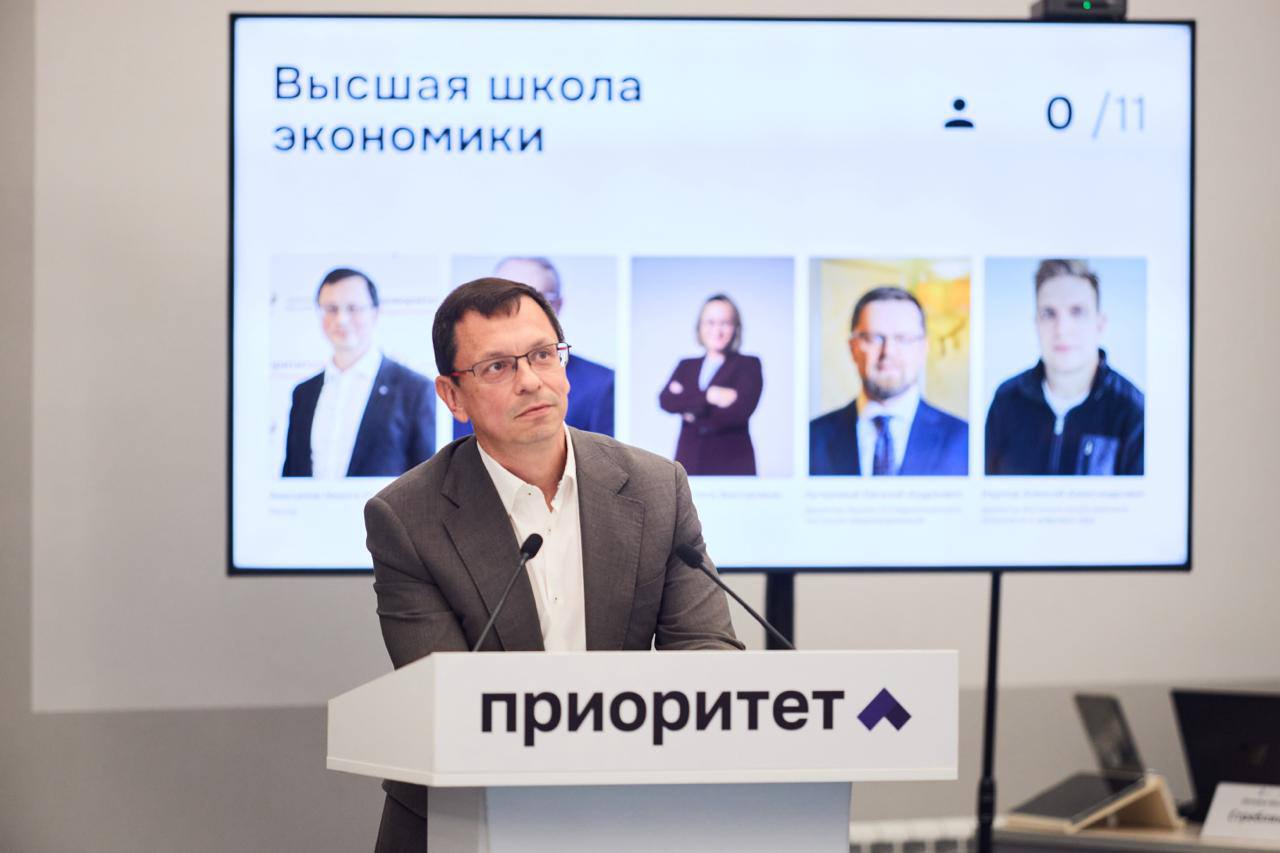
‘The Priority 2030 Strategic Academic Leadership Programme Council has reaffirmed the high level of responsibility assumed by HSE University in delivering its strategic initiatives. HSE faces serious challenges related to the need to focus on concrete, measurable outcomes and on adopting advanced technologies generated by the scientific community. These challenges must be transformed into clear tasks for the entire university team—for every faculty, department, and member of staff. Our main goal is not only to contribute actively to addressing the current issues faced by the academic sector and the country’s economy, but also to pursue accelerated development and to shape the future. This will be the focus of all our future work.’
The Priority 2030 programme, launched by the Russian Ministry of Science and Higher Education in 2021, is now the largest university-support initiative in the country’s history. By order of President Vladimir Putin, it has been extended until 2030. From 2025, the Priority 2030 programme will be implemented as part of the Youth and Children national project.

See also:

HSE University to Develop Predictive Analytics System for Icebreaker Motors
Industrial automation is one of the key applications of artificial intelligence. A predictive analytics system for large electric motors is among the solutions being developed for the industry as part of HSE University’s Strategic Technological Project ‘Multi-Agent Platform of AI Solutions for Industry-Specific Tasks.’ What is predictive analytics, how can it improve the operation of electric motors, and what specialists joined forces to develop this technology? Anton Zarubin, Dean of the School of Computer Science, Physics, and Technology at HSE University–St Petersburg and the project development coordinator, explains in this interview with the HSE News Service.
Scientific Expedition to Hainan: HSE Scientists Organise Conference on Statistical AI in China
The Statistical AI Conference was held in Sanya, Hainan Island, China, from 24 to 28 August 2026. The international event brought together leading experts in statistics, machine learning, and applied AI. Alexey Naumov, Director of the AI and Digital Science Institute at the HSE Faculty of Computer Science, and Sergey Samsonov, Head of the International Laboratory of Stochastic Algorithms and High-Dimensional Inference, were among the conference organisers.
5th Fall into ML Conference to Bring Together Leading AI Researchers
The AI and Digital Science Institute at the HSE Faculty of Computer Science invites researchers, developers and everyone shaping the future of technology to the fifth, anniversary edition of the Fall into Machine Learning conference (Fall into ML 2026). The event will take place on October 23–24, 2026, at the HSE Cultural Centre in Moscow and will become the key meeting point for Russia’s AI community.
HSE University Expands Cooperation with Malaysia in Technology Foresight
HSE University researchers will take part in a study of the future of engineering education in Malaysia, while the Malaysian Industry-Government Group for High Technology (MIGHT) will use the iFORA big-data analysis system to validate the findings of its foresight research. These are the outcomes of a visit by HSE representatives to Kuala Lumpur.
Scientists Train Neural Network to Generate Process Plans from 3D Models
Researchers at the HSE FCS AI and Digital Science Institute have developed CAD2TechSpec, a framework that converts 3D models of mechanical parts into machining process plans—step-by-step instructions for machine tools. The solution aims to reduce the time required for the design and preparation of technical process documentation in mechanical engineering, aircraft manufacturing, and other high-tech industries. The study findings have been published in PeerJ Computer Science.
Biologists Discover 'Molecular Fingerprint' of Preeclampsia
Researchers at HSE University employed a new method to model hypoxia in placental cells during pregnancies complicated by preeclampsia and identified molecular markers of tissue hypoxia. Since hypoxia is one of the key mechanisms underlying preeclampsia, these findings are important for a more accurate and timely diagnosis of the disease and for the development of effective treatment methods. The paper has been published in Placenta.
Laboratory of Future Networks: HSE Telecommunications Research Institute Develops 5G/6G Research Testbed
The 5G/6G testbed at the HSE Telecommunications Research Institute is becoming a research platform, an educational laboratory, and a foundation for developing new software components for future networks. It makes it possible not only to observe how a mobile network operates, but also to change its operating conditions and measure the results: data-transmission speed, latency, errors, radio-resource utilisation, and other parameters. Based on the testbed, researchers plan to develop MIMO, O-RAN, xApp, and IAB technologies, as well as experiment with artificial intelligence.
‘Hedgehog’ Versus ‘Relatives’: Researchers Measure How the Brain Responds to Unexpected Words During Natural Speech
Russian neurophysiologists, including researchers from HSE University, have demonstrated the feasibility of using event-related fields (ERFs) to study brain activity during natural speech perception. The researchers showed that this approach can be applied not only to individual words but also to continuous speech. Their findings indicate that words whose meanings differ significantly from the preceding context require longer processing times. The study also reveals that the brain processes function words in two stages: first, it identifies their grammatical role and then uses this information to predict the next word. The study has been published in Frontiers in Human Neuroscience.
Hybrid Intelligence: Competencies in the Age of AI Discussed at Technoprom-2026
Artificial intelligence is not creating new professions, but rather transforming the nature of existing ones. This was the conclusion reached by participants in the panel session ‘Hybrid Intelligence: Digital and Human Drivers of Development,’ organised by the Institute for Statistical Studies and Economics of Knowledge (ISSEK) at HSE University as part of the 13th International Forum of Technological Development (Technoprom-2026). The experts discussed how the nature of work is changing, which skills are becoming increasingly sought after, and what prevents companies from fully capitalising on new technologies.
Scientists Develop New Solution for 6G Communication Systems
A terahertz neuromorphic circuit developed by scientists at HSE University could make 6G communication systems both more accurate and energy-efficient. The circuit enables indoor tracking of mobile devices with an accuracy of up to 99%. The results were presented at PIERS 2026, an international symposium on Photonics and Electromagnetism held in China.