

Researchers Examine Student Care Culture in Small Russian Universities

Researchers from the HSE Institute of Education conducted a sociological study at four small, non-selective universities and revealed, based on 135 interviews, the dual nature of student care at such institutions: a combination of genuine support with continuous supervision, reminiscent of parental care. This study offers the first in-depth look at how formal and informal student care practices are intertwined in the post-Soviet educational context. The study has been published in the British Journal of Sociology of Education.
In recent decades, universities have come to be viewed not only as places for learning and professional training, but also as environments that provide emotional support. In some countries, this shift is described as the therapeutic turn, as alongside academic objectives, universities begin to prioritise students’ psychological well-being. However, in certain cases, supportive care is accompanied by excessive supervision and restrictions on students’ autonomy.
Small non-selective universities in Russia, especially in the periphery, have received little attention in this context. Many of them evolved from former teacher training institutes and continue to play a key role in meeting the educational needs of entire regions. By non-selective universities, the researchers refer to institutions where the average Unified State Exam (USE) admission score is below 70. In the universities examined in this study, it ranges from 60.28 to 66.8. These institutions have lower USE entry requirements than major research universities and enrol many first-generation students. Despite the important social role of such universities, little is known about their internal culture and the daily lives of students. The authors of this study aimed to fill this gap by closely examining how students are cared for in these universities.
Conducted between 2022 and 2024, the research focused on four public universities located in the Altai Republic, Altai Krai, Kamchatka Krai, and Ivanovo Oblast. These institutions enrol between 799 and 2,334 full-time students, with a student–faculty ratio of 10:1 to 16:1, lower than that of major universities.
The researchers observed university life and conducted 135 semi-structured interviews with students, faculty, and administrators, including department heads, deans, and vicerectors. The interviews addressed a broad range of topics, from the educational process and participation in extracurricular activities to personal future plans. Questions about care and support were not asked directly; instead, these themes emerged as participants described the campus atmosphere and their everyday relationships. The researchers observed frequent use of expressions such as children, second family, and like at home, which helped identify the key characteristics of the university culture.
The results revealed a pervasive duality of student care practiced at the universities studied. On one hand, faculty members focus on creating a warm and friendly atmosphere: they know their students by name, take an interest in their lives, and are willing to assist with both academic and personal matters. On the other hand, in the absence of dedicated student support services, faculty members often take on mentoring roles: they explain institutional rules, help resolve conflicts, and support students in difficult situations.
Care and support often take the form of continuous monitoring. The 'grown-ups' track attendance, oversee dormitory behaviour, contact parents, or hold 'parent–teacher conferences.' Even students who are legally adults are treated as 'children' in need of guidance. Notably, all faculty members involved provide this care without additional compensation, which may be influenced by gendered traditions in the teaching profession, as most faculty at the universities studied are women.
In interviews, students often liken the university to their family and faculty members to their parents or 'second mums.' While this can foster trust, it also reinforces a model in which students do not fully transition to independence, continuing instead to live in a system of control reminiscent of secondary school.
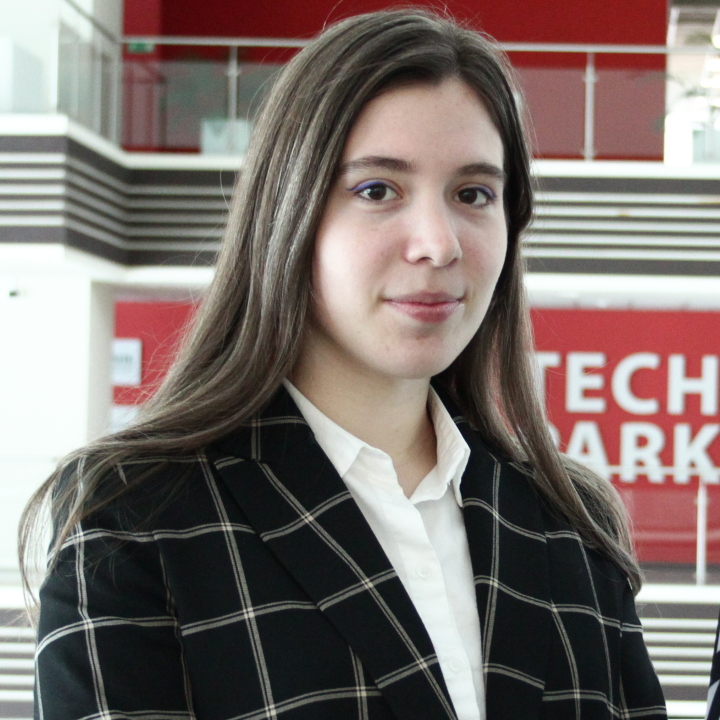
Tatiana Akuneeva
'We have shown that in small, non-selective universities, caring for students involves both support and control. These forms are not contradictory but together create a stable system of relationships that largely holds the university community together,' summarises Tatiana Akuneeva, Research Assistant at the Laboratory for University Development of the HSE Institute of Education (IOE).

Ksenia Romanenko
'These universities combine trusting, emotionally warm relationships between students and faculty with elements of strict supervision, including behaviour monitoring and parental involvement. While this model can promote cohesion and stability within the university community, it also reinforces student dependence and extends a school-like experience,' notes Ksenia Romanenko, Expert at the IOE Laboratory for University Development.
See also:

'When I Do My Work Well, It Benefits People with Mental Disabilities and Their Families'
After exploring several research fields, Maxim Gurin realised that he wanted to study sociology while specifically focusing on how his research could benefit the people at the centre of it. In this interview with the HSE Young Scientists project, he shares his passion for hip-hop dancing, the magical appeal of the courtyard at the House on the Embankment, and his quest to uncover the memories of the Chelyuskinitsy during a trip along the Trans-Siberian Railway.
HSE Researchers Offer Guidance to Prevent Undergraduate Burnout
Researchers at the HSE Institute of Education have identified how much time students should ideally devote to their studies, extracurricular activities, and personal life to maintain strong academic performance without compromising their mental health. An analysis of responses from 2,753 students, combined with their actual academic results, revealed several risk factors—such as excessive homework—as well as positive factors, including sufficient sleep, regular exercise, and moderate participation in projects. Based on these findings, the researchers developed practical recommendations for both students and universities. The paper has been published in the European Journal of Education.
Scientists Discover Why Parents May Favour One Child Over Another
An international team that included Prof. Marina Butovskaya from HSE University studied how willing parents are to care for a child depending on the child’s resemblance to them. The researchers found that similarity to the mother or father affects the level of care provided by parents and grandparents differently. Moreover, this relationship varies across Russia, Brazil, and the United States, reflecting deep cultural differences in family structures in these countries. The study's findings have been published in Social Evolution & History.
When a Virus Steps on a Mine: Ancient Mechanism of Infected Cell Self-Destruction Discovered
When a virus enters a cell, it disrupts the cell’s normal functions. It was previously believed that the cell's protective response to the virus triggered cellular self-destruction. However, a study involving bioinformatics researchers at HSE University has revealed a different mechanism: the cell does not react to the virus itself but to its own transcripts, which become abnormally long. The study has been published in Nature.
Researchers Identify Link between Bilingualism and Cognitive Efficiency
An international team of researchers, including scholars from HSE University, has discovered that knowledge of a foreign language can improve memory performance and increase automaticity when solving complex tasks. The higher a person’s language proficiency, the stronger the effect. The results have been published in the journal Brain and Cognition.
Artificial Intelligence Transforms Employment in Russian Companies
Russian enterprises rank among the world’s top ten leaders in AI adoption. In 2023, nearly one-third of domestic companies reported using artificial intelligence. According to a new study by Larisa Smirnykh, Professor at the HSE Faculty of Economic Sciences, the impact of digitalisation on employment is uneven: while the introduction of AI in small and large enterprises led to a reduction in the number of employees, in medium-sized companies, on the contrary, it contributed to job growth. The article has been published in Voprosy Ekonomiki.
Lost Signal: How Solar Activity Silenced Earth's Radiation
Researchers from HSE University and the Space Research Institute of the Russian Academy of Sciences analysed seven years of data from the ERG (Arase) satellite and, for the first time, provided a detailed description of a new type of radio emission from near-Earth space—the hectometric continuum, first discovered in 2017. The researchers found that this radiation appears a few hours after sunset and disappears one to three hours after sunrise. It was most frequently observed during the summer months and less often in spring and autumn. However, by mid-2022, when the Sun entered a phase of increased activity, the radiation had completely vanished—though the scientists believe the signal may reappear in the future. The study has been published in the Journal of Geophysical Research: Space Physics.
Banking Crises Drive Biodiversity Loss
Economists from HSE University, MGIMO University, and Bocconi University have found that financial crises have a significant negative impact on biodiversity and the environment. This relationship appears to be bi-directional: as global biodiversity declines, the likelihood of new crises increases. The study examines the status of populations encompassing thousands of species worldwide over the past 50 years. The article has been published in Economics Letters, an international journal.
Scientists Discover That the Brain Responds to Others’ Actions as if They Were Its Own
When we watch someone move their finger, our brain doesn’t remain passive. Research conducted by scientists from HSE University and Lausanne University Hospital shows that observing movement activates the motor cortex as if we were performing the action ourselves—while simultaneously ‘silencing’ unnecessary muscles. The findings were published in Scientific Reports.
Russian Scientists Investigate Age-Related Differences in Brain Damage Volume Following Childhood Stroke
A team of Russian scientists and clinicians, including Sofya Kulikova from HSE University in Perm, compared the extent and characteristics of brain damage in children who experienced a stroke either within the first four weeks of life or before the age of two. The researchers found that the younger the child, the more extensive the brain damage—particularly in the frontal and parietal lobes, which are responsible for movement, language, and thinking. The study, published in Neuroscience and Behavioral Physiology, provides insights into how age can influence the nature and extent of brain lesions and lays the groundwork for developing personalised rehabilitation programmes for children who experience a stroke early in life.